
Chiropractic Neurology Consultations
A More Complete Neurological Evaluation for Your Personal Injury Patients

Our Approach at Apex
When a motor vehicle collision patient presents with more than musculoskeletal pain, getting a clear picture of the neurologic component of the injury can be challenging.
Dr. Moje provides comprehensive consultation evaluations for chiropractors managing personal injury cases when concussion, post-concussion syndrome, traumatic brain injury, balance dysfunction, oculomotor abnormalities, or other neurologic involvement is suspected.
This is a consultation — not a transfer of care.
Your patient can remain under your care while Dr. Moje provides an additional level of neurological evaluation, objective testing, clinical recommendations, and detailed documentation to help you better understand and manage the case.
Consult. Evaluate. Report. Return to the referring doctor.
When the Accident Is More Than Neck or Back Pain
Motor vehicle collisions can produce complex injuries that extend beyond the musculoskeletal system.
Consider a neurological consultation when your patient reports symptoms such as:
-
Headaches that persist or change after the collision
-
Dizziness or vertigo
-
Balance difficulties
-
Visual strain or difficulty tracking
- Light or motion sensitivity
-
Brain fog
-
Difficulty concentrating
-
Memory changes
-
Unexplained fatigue
-
Numbness or tingling
-
Coordination changes
-
Symptoms inconsistent with the apparent musculoskeletal injury
-
Persistent symptoms despite appropriate chiropractic care
These findings may warrant a closer examination of how the patient’s nervous system, visual system, vestibular function, and musculoskeletal system were affected by the collision.
A Comprehensive 90-Minute Consultation
Dr. Moje spends approximately 90 minutes directly evaluating the patient, allowing time to investigate findings that may be difficult to adequately assess during a typical personal injury examination.
The consultation includes:

Comprehensive History
A detailed review of the collision, mechanism of injury, immediate and delayed symptoms, previous injuries, treatment history, current complaints, and changes in the patient’s ability to work and perform normal activities.

Detailed Orthopedic Examination
Orthopedic and musculoskeletal testing helps identify and document relevant physical findings associated with the patient’s injuries.
Functional Neurological Examination
The neurological evaluation examines areas such as coordination, sensory and motor function, neurologic responses, and other findings that may help identify dysfunction following trauma.
RightEye Oculomotor Testing
Objective eye-tracking technology provides additional information about eye movement and visual tracking function that may not be apparent through observation alone.
Balance Testing
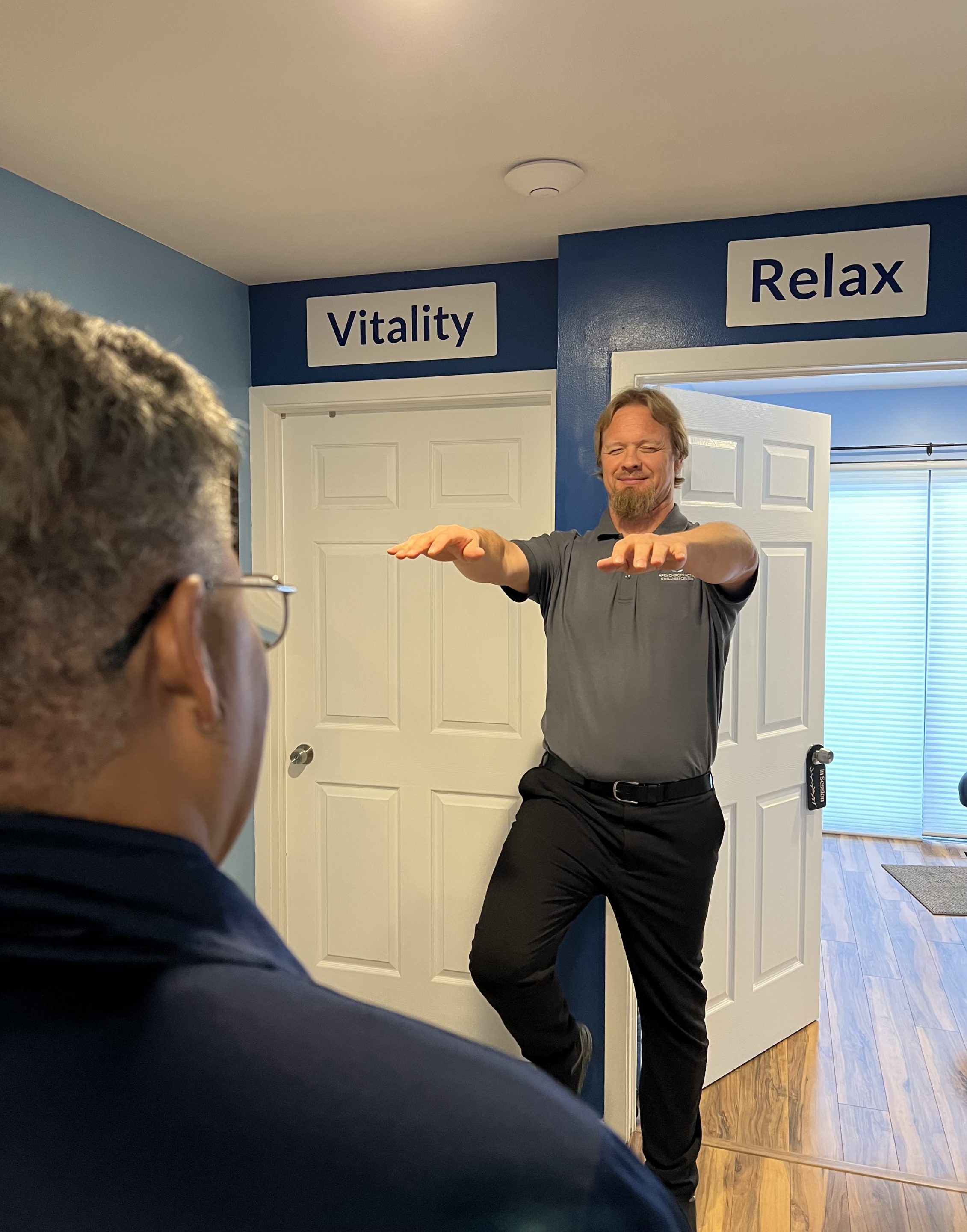
Balance and postural testing provides another perspective on how the patient’s neurologic and sensorimotor systems may have been affected following the collision.
Objective Information You Can Use
The value of this consultation extends beyond the examination itself.
Following the evaluation, Dr. Moje typically spends an additional 30–45 minutes reviewing findings and preparing a detailed written report.
The report is designed to provide the referring chiropractor with:
-
Relevant history and examination findings
-
Objective findings from neurological, oculomotor, and balance testing
-
Clinical impressions based on the examination
-
Recommendations for additional care or testing when indicated
-
Information that may help guide the patient’s ongoing treatment
-
Documentation of neurologic findings that may be relevant to the patient’s personal injury case
When appropriate and authorized, this documentation may also provide attorneys and other professionals involved in the case with a more detailed understanding of the patient’s injuries, clinical findings, recommendations, and potential need for ongoing care.
You Remain the Treating Chiropractor
Our role is to support your case — not take it over.
Dr. Moje can serve as a consulting chiropractic neurologist while the patient continues receiving their primary chiropractic care in your office.
After the consultation, findings and recommendations are communicated back to the referring provider so you have additional clinical information to incorporate into the patient’s care.
If additional neurological care at Apex appears appropriate, that can be discussed with the referring doctor and patient rather than assumed as part of the consultation.
When Should You Consider Referring?
You don’t necessarily need to know that your patient has a concussion before referring.
Consider a consultation when:
-
The patient’s symptoms suggest the accident involved more than a straightforward sprain/strain injury.
-
Headaches, dizziness, visual complaints, balance problems, or cognitive changes developed after the collision.
-
Symptoms are persisting longer than expected.
-
Your examination findings don’t completely explain what the patient is experiencing.
-
You suspect concussion or another neurologic injury and want a more extensive evaluation.
-
You want objective oculomotor and balance testing.
-
You need additional clinical recommendations for a complicated PI case.
-
More detailed neurological documentation would help clarify the patient’s clinical picture.
Refer A Patient
A Second Set of Eyes for Complicated PI Cases
You don’t have to refer the patient away simply because the case has become neurologically complicated.
Dr. Moje’s consultation gives you access to functional neurological evaluation, RightEye oculomotor testing, balance testing, and detailed reporting while allowing you to remain the patient’s treating chiropractor.
Have a PI patient you’re concerned about?